
Contractor Storage Yard vs Industrial Lease Which Makes More Sense?
Updated: Sep 21

Contractor Storage Yard vs Industrial Lease Which Makes More Sense?
As contractor businesses grow, storage decisions become more important and more expensive. Many owners reach a point where trucks, trailers, containers, and equipment no longer fit at home or on job sites. At that stage, two options usually come up.
Rent a contractor storage yard or sign an industrial lease.
While both can work, they serve very different types of businesses. Understanding the difference can save time, money, and long term headaches.
What an Industrial Lease Is Designed For
Industrial leases are typically built for larger operations that need indoor space. Warehouses, manufacturing businesses, and distribution companies often require enclosed buildings, office space, utilities, and long term stability.
These leases usually come with multi year commitments, higher monthly costs, and additional expenses like utilities, maintenance, insurance, and property taxes. Many also require more square footage than a growing contractor actually needs.
For businesses that simply need outdoor space for vehicles and equipment, an industrial lease can be more than necessary.
What a Contractor Storage Yard Offers
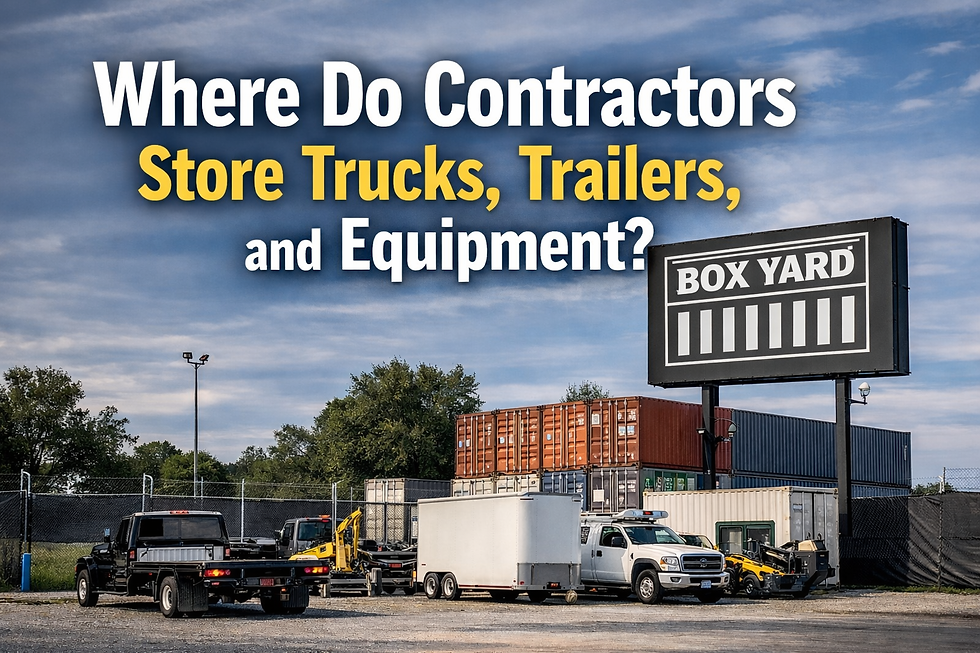
A contractor storage yard is designed specifically for outdoor business storage. These yards provide space for trucks, trailers, containers, and equipment without the overhead of a warehouse or building lease.
Most contractor storage yards focus on security, access, and flexibility rather than office space. They allow businesses to operate efficiently without paying for features they do not use.
This makes them a practical solution for service based companies that work primarily in the field.
Cost Differences Between the Two Options
Industrial leases often require long term contracts and higher upfront commitments. In addition to rent, businesses may be responsible for utilities, repairs, and other operational costs.
Contractor storage yards typically offer month to month arrangements with predictable pricing. This allows businesses to control costs while scaling up or down as needed.
For many small but established companies, this flexibility is a major advantage.
Access and Daily Operations
Access plays a big role in daily efficiency. Many industrial properties have limited access hours or restrictions that do not align with early mornings or late returns.
Contractor storage yards are often built with twenty four hour access in mind. This allows crews to load and unload on their own schedule without delays.
For businesses that operate outside standard office hours, this difference matters.
Security Considerations
Security is critical for both options, but the approach differs.
Industrial buildings may provide enclosed storage but often require additional security systems and monitoring. Contractor storage yards focus on perimeter security, gated access, and controlled entry designed specifically for vehicles and equipment.
A well managed yard shared by other contractors also adds a layer of accountability and oversight.
Which Option Makes Sense for Growing Contractors?
An industrial lease makes sense for businesses that need indoor space, offices, or manufacturing capabilities.
A contractor storage yard makes sense for businesses that need secure outdoor space for trucks, trailers, containers, and equipment without committing to a long term lease.
For many growing service based companies, the yard option provides exactly what is needed without unnecessary cost or complexity. Box Yard runs three yards across the Denver metro.
Choosing the Right Fit
The right storage solution depends on how your business operates today and where it is headed next.
For contractors who spend their days in the field and simply need a secure, accessible place to store vehicles and equipment, a contractor storage yard is often the more practical choice.
As businesses grow, choosing flexibility early can create room to scale later.
Comments