
Where Do Contractors Store Trucks, Trailers, and Equipment?
Updated: Sep 21
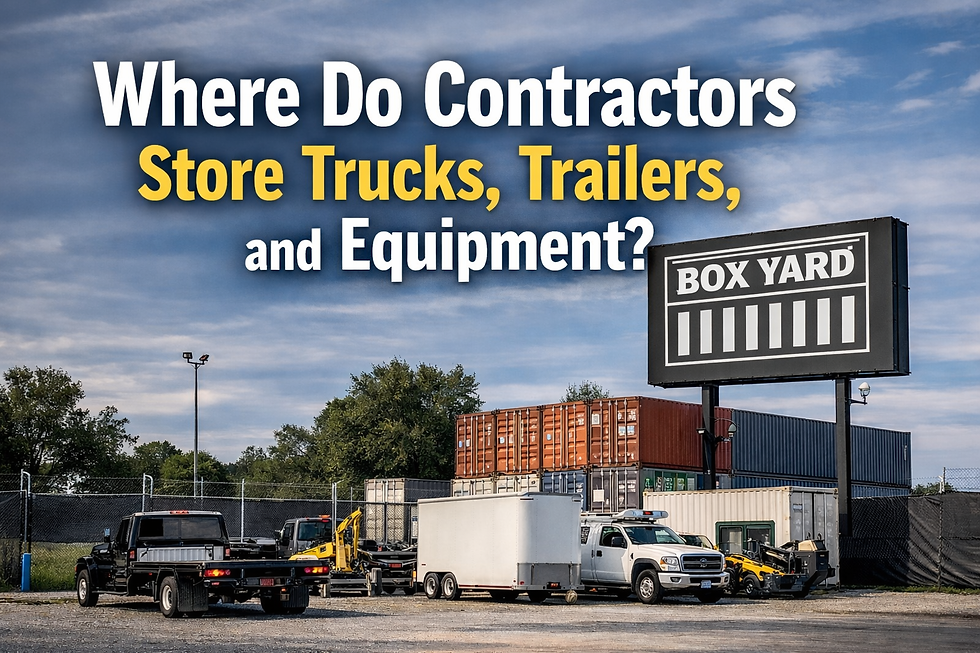
Where Do Contractors Store Trucks, Trailers, and Equipment?
As a contracting or service based business grows, storage becomes one of the first real operational challenges. What works at the beginning often stops working quickly once trucks, trailers, and equipment are added.
Many contractors reach a point where parking at home is no longer practical, job sites are not reliable, and street parking creates risk. At that stage, the question becomes simple but important.
Where do contractors actually store their trucks, trailers, and equipment?
Why Home and Street Parking Stop Working
In the early stages, many small businesses park vehicles at home or on nearby streets. Over time, this creates issues.
Neighborhood restrictions and city ordinances often limit commercial vehicles. Equipment left outside increases the risk of theft or damage. Access becomes inconsistent when trucks are blocked in or spread across different locations.
Most importantly, growing businesses need reliability. When crews are leaving early or returning late, storage must work on their schedule, not the other way around.
Common Storage Options Contractors Consider
Contractors typically explore a few different storage paths as they grow.
Some look into leasing industrial property. While this can work for larger operations, it often comes with long term commitments, higher costs, and more space than necessary.
Others use traditional self storage facilities. These are usually designed for personal use and often restrict vehicle storage, trailer parking, or access hours.
Another option is shared or unsecured lots. These may be cheaper, but security and reliability are often lacking.
This is why contractor storage yards have become an increasingly popular solution.
What Is a Contractor Storage Yard?
A contractor storage yard is an outdoor space designed specifically for business vehicles and equipment.
These yards typically provide space for trucks, trailers, containers, and equipment without the overhead of a warehouse or industrial lease. They are built for daily use and operational efficiency rather than occasional storage.
For many established but growing businesses, this fills the gap between parking at home and owning property.
What Contractors Look for in a Storage Yard
While every business is different, most contractors prioritize the same core needs.
Security is critical. Gated access, fencing, and controlled entry help protect valuable vehicles and equipment.
Access matters just as much. Businesses often operate early mornings, evenings, and weekends. Storage that limits hours creates friction and delays.
Location is another key factor. Being close to highways and service areas saves time, fuel, and labor. Box Yard's yards in Arvada and Wheat Ridge sit close to the corridors most Denver metro crews already drive.
Flexibility is also important. Many businesses want month to month options that allow them to scale without locking into long term commitments.
Finally, contractors prefer yards that are used by other businesses like theirs. A shared professional environment tends to be cleaner, safer, and better managed.
Why Contractor Storage Yards Make Sense for Growing Businesses
Contractor storage yards are not just about parking. They support daily operations.
Having all vehicles and equipment in one secure location improves organization and efficiency. Crews know where to start and end their day. Equipment stays accessible. Businesses avoid unnecessary downtime caused by scattered storage.
For companies that do not need indoor warehouse space, a storage yard offers exactly what is needed and nothing that is not.
Choosing the Right Storage Solution
The best storage solution is one that supports growth without creating unnecessary cost or complexity.
For many contractors, a secure yard with twenty four seven access and a good location solves the problem simply and effectively. It allows the business to operate professionally while staying flexible as needs change.
As small businesses grow, storage stops being an afterthought. Choosing the right setup early can prevent bigger operational headaches later.
See what is open right now across the Denver metro yards.


Comments